
A plain checklist for off-plan handover in Dubai: the timeline from completion notice to keys, what to check, the defects liability periods in law, and who does what.
Handover is the moment an off-plan purchase becomes a home you can live in or let. It is also when you have the most say. Once you accept the keys and sign the handover forms, the clock starts on the developer’s defects obligations. By then the final payment is usually made too.
Here is what happens at handover in Dubai, the documents you need and a room-by-room checklist. It also covers how long the developer must fix defects under Dubai law, and what your broker does versus an independent inspector. If you are still at the start of the journey, our guide to buying off-plan in the UAE covers each step from reservation onwards.
What happens at off-plan handover?
Handover is the formal transfer of a completed unit from the developer to you. It follows the building’s completion certificate and a written notice from the developer. The exact notice period, payment deadline and handover steps are set by your sale and purchase agreement (SPA), so read those clauses before the notice arrives.
The typical sequence looks like this:
- Completion certificate. The building is certified complete by the relevant authority [to confirm issuing authority wording for Dubai projects].
- Completion or handover notice. The developer writes to you with the final amount due, the documents required and the steps to book your handover appointment. The notice period is set in your SPA [to confirm typical range, varies by SPA].
- Final payment and clearances. You pay the balance due on completion into the project escrow account named in your SPA, along with any other charges your SPA lists.
- Inspection. You, or an inspector on your behalf, walk the unit and record any defects on a snag list.
- Keys and handover forms. You sign the handover documents, receive keys and access cards, and the unit becomes your responsibility.
- Title deed. Your Oqood record converts into a title deed issued by Dubai Land Department. Our step-by-step guide to that stage covers it in detail.
Do not sign a handover form that says the unit is accepted “as is” or free of defects until your snag list is attached and acknowledged in writing.
What documents do I need for handover?
Gather these early. Missing paperwork often pushes a handover appointment back.
| Document | Why it matters |
|---|---|
| Passport copy, and UAE ID if you are a resident | Identity checks for handover and the title deed |
| Signed SPA and any addendums | Sets the handover terms, specification and payment due |
| Oqood interim registration e-certificate | Proves your off-plan purchase is registered with Dubai Land Department |
| Statement of account and payment receipts | Confirms every instalment reached the escrow account |
| Completion or handover notice | Lists the final amount, deadlines and appointment steps |
| Bank documents, if you are using a mortgage | The lender may need to release funds before keys [to confirm per lender] |
| Power of attorney, if someone attends for you | Must be valid and, if issued abroad, properly ratified |
Not sure what your Oqood certificate shows? Our guide to Oqood explained walks through how to check it.
What should I check at handover?
Book enough time and go in daylight. Take the SPA specification sheet and floor plan with you, because a defect is anything that falls short of what the contract promised, not only what looks broken.
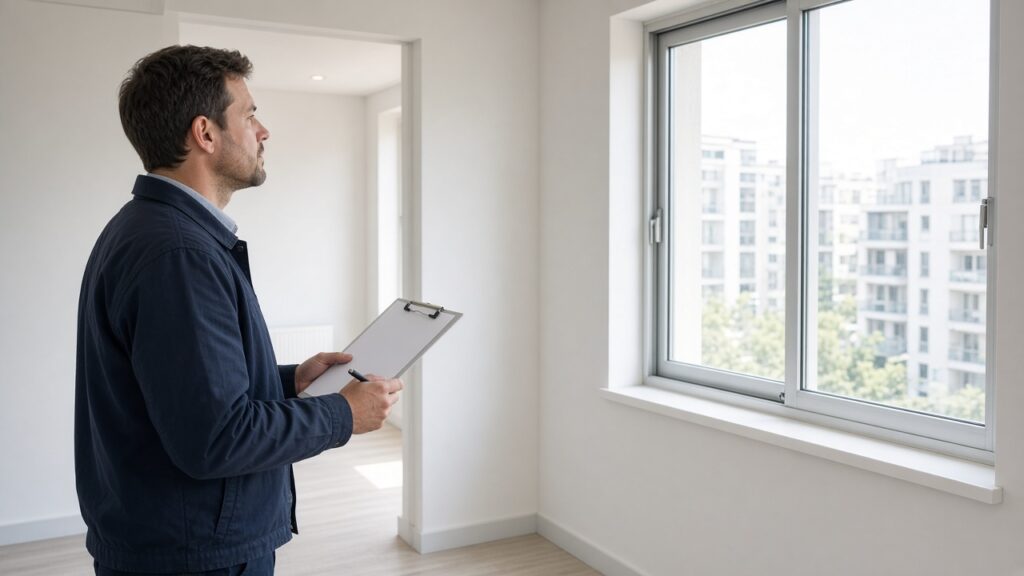
Handover checklist.
- Layout and size. Rooms, balcony and storage match the floor plan in your SPA. Note any visible differences.
- Specification. Flooring, kitchen, appliances, sanitaryware and fittings match the brand and finish listed in the SPA.
- Walls, ceilings and floors. Cracks, uneven tiles, hollow-sounding tiles, paint marks, stains and gaps in grout or silicone.
- Doors and windows. Open, close and lock every one. Check seals, handles, glass and sliding tracks.
- Water. Run every tap and shower, flush every toilet, and look for leaks under sinks and around drains. Check hot water reaches each outlet.
- Electrical. Test every switch, socket and light. Confirm the distribution board is labelled.
- Air conditioning. Run each unit and check cooling, noise and condensation drainage.
- Kitchen and appliances. Switch each appliance on. Check cabinet doors, drawers and worktop joints.
- Balcony and outdoor areas. Drainage, railings, tiling and any water marks.
- Common areas and access. Lifts, parking bay allocation, access cards, mailbox and the building’s amenities you were promised.
- Meters and connections. Note meter readings and confirm the steps to connect utilities in your name [to confirm current utility connection steps and deposits].
Photograph every issue, number it and add it to a written snag list. Make sure the developer signs or acknowledges that list, and keep a copy with a date on it.
How long does the developer have to fix defects?
Dubai law sets two separate liability periods for developers of jointly owned buildings, such as apartment towers. According to Dubai Law No. 6 of 2019 on jointly owned property, Article 40:
| Type of defect | Developer liable for | Clock starts |
|---|---|---|
| Structural parts of the building | 10 years | Date of the project’s completion certificate |
| Installations: mechanical, electrical, sanitary, sewerage and similar | 1 year | Date the unit is handed over to you. If you do not take possession, the completion certificate date |
The same article says any agreement made after the law came into force that contradicts these protections is void. Your SPA can add to them, but it cannot reduce them.
Two points often trip people up:
- Delaying handover does not pause the clock. If you refuse or put off taking possession, the one-year period runs from the completion certificate date instead.
- The law sets the liability period, not a repair deadline. How many days the developer has to fix each snag item is usually set in the SPA or the developer’s handover process [to confirm: no fixed statutory repair deadline found for individual snag items]. Agree a written target date for each item.
Villas and townhouses outside a jointly owned building may fall under different rules, including the UAE Civil Code’s provisions on contractor liability [to confirm which provisions apply to standalone villas].
Report every installation defect in writing within the first year after handover. After that, only structural defects remain within the developer’s statutory liability.
When do service charges start?
Service charges usually start from handover or from the date set in your completion notice, even if you have not moved in [to confirm: start date depends on SPA wording]. Service charges in Dubai are approved by RERA, and owners can look up approved rates for their building in the Land Department’s Service Charge Index. Check the figure in your completion notice against the index before you pay.
For a full breakdown of costs from booking to keys, see the true cost of buying off-plan.
Broker vs inspector: who does what?
Both can help at handover, but they do different jobs. Knowing who does what saves you time and money.
| Job | Your broker | An independent inspector |
|---|---|---|
| Read the completion notice and final amount | Yes | No |
| Check payments reached escrow and documents are in order | Yes | No |
| Book and attend the handover appointment | Yes, if you want support | Attends the inspection |
| Technical testing of moisture, electrics, AC and tiles | No | Yes, with tools and a written report |
| Prepare a detailed snag report | No | Yes |
| Follow up with the developer on fixes and keys | Yes | Re-inspection, if agreed |
| Title deed and post-handover paperwork | Yes | No |
When to hire an inspector. It makes most sense if you live abroad and cannot attend, if the unit is large or high in value, if you plan to let it straight away, or if you are not confident testing services yourself. Book the inspection before you sign the handover forms, so the report can be attached to your snag list. Inspection fees vary by provider and unit size [to confirm, no official fee schedule].
How Sovereign helps
Sovereign Realty is a RERA-registered brokerage working with buyers in the UAE and across the GCC and beyond. When your completion notice arrives, we check the final amount against your SPA, confirm every payment reached the escrow account, help you gather your documents and attend handover with you if you wish. We then follow up with the developer on snag items in writing and prepare the paperwork for your title deed.
If your handover is coming up, speak to Sovereign and we will set out every step, document and deadline for your unit in writing.
FAQ
What happens at off-plan handover in Dubai?
After the building receives its completion certificate, the developer sends a handover notice with the final amount due. You pay the balance into escrow, inspect the unit, record defects on a snag list, sign the handover forms and receive the keys. Your Oqood record then converts into a title deed.
What should I check at handover?
Check the layout and finishes against your SPA, then test doors, windows, taps, drains, electrics, air conditioning and appliances. Look for cracks, leaks and uneven tiles. Photograph each issue, list it in writing and have the developer acknowledge the list before you sign.
How long does the developer have to fix defects?
According to Dubai Law No. 6 of 2019, Article 40, developers of jointly owned buildings are liable for structural defects for 10 years from the completion certificate, and for defective installations such as electrical, mechanical and plumbing works for 1 year from handover. Repair deadlines for individual snag items are usually set in the SPA.
Does the defects period start if I delay handover?
Yes. Under Article 40 of Dubai Law No. 6 of 2019, if an owner does not take possession of the unit, the one-year installations period starts from the project’s completion certificate date instead of the handover date.
Do I need an independent inspector?
It is not required, but it helps if you live abroad, the unit is large, you plan to let it quickly or you are not confident testing services yourself. An inspector tests the unit and writes a snag report. Your broker handles payments, documents and follow-up with the developer.
When do service charges start after handover?
Usually from handover or the date in your completion notice, depending on your SPA. Service charges are approved by RERA, and you can check your building’s approved rate in Dubai Land Department’s Service Charge Index.